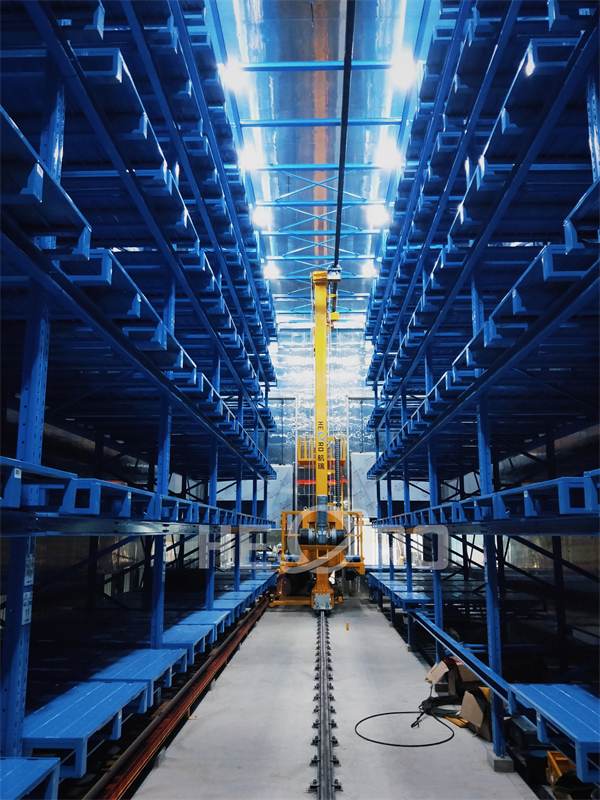
Amid the wave of smart manufacturing transformation, smart warehousing emerges as a critical component. It breaks free from the limitations of traditional warehousing—manual control, information silos, and static management—by establishing a fully intelligent system through integrated hardware and software. This system serves as the key engine for smart factories to reduce costs, enhance efficiency, and optimize supply chain collaboration. Data-driven and collaboration-focused, it achieves transparent, automated, and intelligent upgrades in warehousing operations, aligning with modern industrial demands for flexible production.
The competitive edge of smart warehousing stems from the synergistic empowerment of multiple technologies. The perception layer utilizes RFID, industrial sensors, and other devices to collect real-time material information, storage location status, and environmental parameters, enabling full lifecycle traceability of materials. The execution layer employs automated storage and retrieval systems (AS/RS), AGVs, and intelligent sorting robotic arms to replace manual labor in repetitive tasks like storage, retrieval, transportation, and sorting, significantly boosting operational efficiency and accuracy. The decision-making layer leverages AI algorithms and big data analytics to dynamically optimize storage locations, forecast demand, and plan routes. It integrates with WMS, MES, and ERP systems to break down information silos, supporting just-in-time (JIT) material supply for production processes.
Compared to traditional warehousing models, intelligent warehousing delivers substantial value-added benefits for smart factories. In terms of efficiency, it boosts inventory turnover rates by over 35%, achieves 99.9% order fulfillment accuracy, and compresses inventory counting cycles from weeks to hours. Cost-wise, it saves over 80% of land use through three-dimensional space utilization, reduces labor costs by 50%, and minimizes inventory backlog and material wastage. Collaboration-wise, it achieves seamless integration between warehousing, production, and logistics, effectively shortening production downtime due to material shortages and enhancing supply chain responsiveness.
Currently, smart warehousing has been adapted to meet the needs of smart factories across multiple sectors, including custom home furnishings, automotive parts, and electronics. From foundational digital upgrades to fully automated operations, enterprises can implement this through a phased approach: standardizing processes, integrating data, automating operations, and advancing intelligent management. Looking ahead, with the evolution of digital twins and 5G edge computing technologies, smart warehousing will evolve toward autonomous decision-making, human-machine collaboration 3.0, and green, low-carbon solutions. This will further strengthen the supply chain resilience of smart factories and empower the manufacturing sector to achieve high-quality development.