Industry News
News Center
2026.03.19
AGV Technology Continues to Evolve, Empowering Smart Upgrades Across Multiple Industries and Ushering in a New Era of Unmanned Material Handling.
Amid the rapid development of smart manufacturing and intelligent logistics, AGVs (Automated Guided Vehicles)—as key intelligent equipment in the field of unmanned material handling—have been widely adopted across various industries due to their high efficiency, precision, and flexibility. They have become a crucial pillar for enterprises seeking to reduce costs, improve efficiency, and achieve digital transformation. With continuous technological breakthroughs, the application scenarios for AGVs are constantly expanding, injecting new momentum into the high-quality development of various industries.
Through autonomous navigation technology, AGVs can perform tasks such as unmanned material handling, production line integration, and warehouse sorting. They can complete the entire workflow without human intervention, effectively addressing the pain points of traditional manual handling, such as low efficiency, high error rates, and numerous safety hazards. Currently, AGVs are widely used in automotive manufacturing, e-commerce warehousing, 3C electronics, pharmaceuticals, food and beverage, and many other sectors, significantly improving operational efficiency.
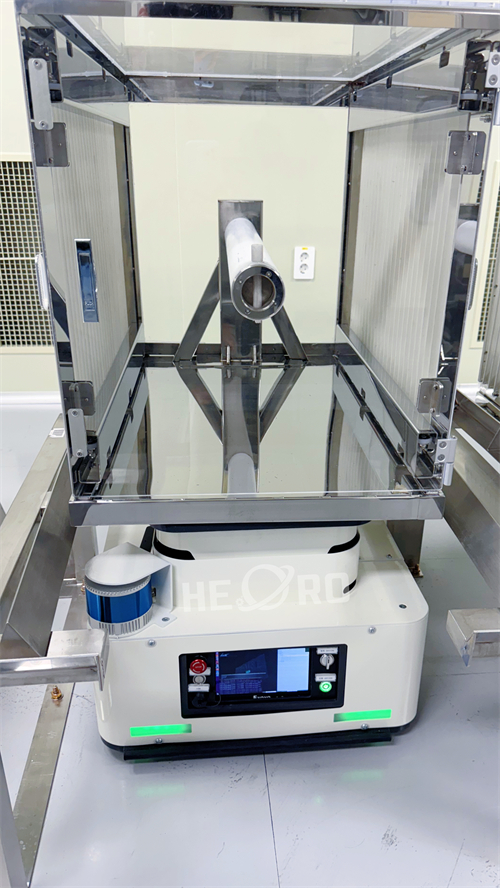
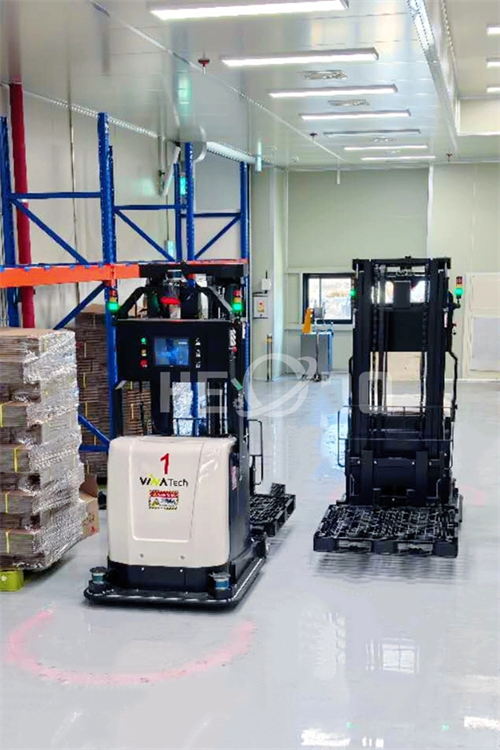
In recent years, AGV technology has evolved at an increasingly rapid pace. The adoption of advanced technologies such as laser SLAM navigation and vision-based navigation has freed AGVs from reliance on fixed paths, significantly enhancing their adaptability and enabling them to quickly adjust to operational requirements across diverse scenarios. Additionally, the integration of AGVs with intelligent dispatch systems and WMS systems has enabled coordinated cluster operations involving multiple AGVs, further improving logistics efficiency and reducing corporate operating costs.
As a key component of intelligent upgrades, market demand for AGVs continues to rise. With the maturation of domestic manufacturing technologies and the gradual reduction in overall equipment costs, more small and medium-sized enterprises are now able to adopt AGV-based intelligent solutions. From material transport in production workshops to intelligent sorting in warehouses, and from specialized handling in cleanrooms to operations in cold-chain environments, AGVs are progressively replacing traditional manual handling methods, becoming a vital tool for industries to achieve automation and intelligent transformation.