Industry News
Smart Warehouses Empower Business Transformation, Redefining Warehouse Management Through End-to-End Intelligence.
Amid the wave of digital transformation in the logistics industry, smart warehouses—as a core pillar—are gradually replacing traditional warehouse models. With their advantages of high efficiency, accuracy, and low costs, they have become a key driver for businesses to enhance their core competitiveness. Leveraging technologies such as the Internet of Things (IoT), big data, and automated equipment, smart warehouses enable intelligent control and management across the entire warehousing process. They address the pain points of traditional warehousing—such as reliance on manual labor, low efficiency, and high error rates—and provide a new solution for upgrading warehousing management across various industries.
The core functions of smart warehouses focus on end-to-end automation and intelligence, covering multiple stages including intelligent receiving, precise storage, automated picking, smart scheduling, and data-driven management. Compared to traditional warehousing, smart warehouses deploy AGVs (Automated Guided Vehicles) and intelligent stackers to enable automatic goods handling and precise positioning. They complete inbound and outbound operations without manual intervention, significantly boosting operational efficiency while minimizing errors in picking and inventory counts. Additionally, the management system integrated into smart warehouses collects real-time warehouse data, enabling dynamic inventory monitoring and intelligent restocking alerts. This helps businesses optimize inventory structure, reduce excess inventory, and lower capital tied-up costs.
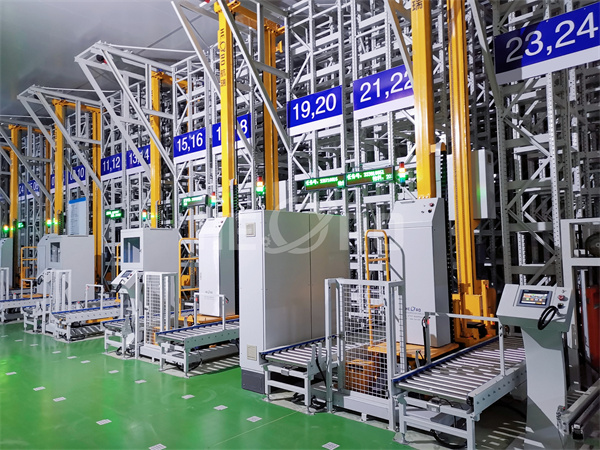
High efficiency, energy savings, and flexible adaptability are the significant advantages of smart warehouses. They can operate 24/7, with operational efficiency exceeding that of traditional warehouses by more than 50%. This allows them to handle operational pressures during peak order periods and shorten order fulfillment cycles. In terms of cost control, smart warehouses replace manual labor with automated equipment, significantly reducing labor costs. Combined with multi-level storage technology, they fully utilize vertical warehouse space, increasing space utilization by 30%–50% and further lowering warehouse rental costs. At the same time, smart warehouses possess strong adaptability, allowing them to flexibly adjust operational modes based on the storage needs of different industries and product categories, thereby meeting diverse warehouse management requirements across various scenarios.