Industry News
Smart Warehousing Empowers Business Transformation, Unlocking New Value in Warehouse Operations Across Multiple Dimensions.
Amid the wave of digital transformation in the logistics industry, smart warehousing—as a core area of advancement—is gradually replacing traditional warehousing models and injecting new momentum into warehouse operations for businesses of all kinds. Leveraging technologies such as the Internet of Things (IoT), big data, and automated equipment, smart warehousing overcomes the efficiency bottlenecks and management challenges of traditional warehousing, achieving breakthroughs in areas such as space utilization, operational efficiency, and cost control, thereby becoming a vital pillar for businesses to enhance their core competitiveness.
The most obvious advantage of smart warehousing is the significant improvement in space utilization. Traditional warehousing relies on manual handling, with limited shelf heights and the need to reserve wide aisles, resulting in a significant waste of vertical space and a space utilization rate of only 30%–40%. In contrast, smart warehousing utilizes equipment such as multi-tier shelving and four-way shuttle carts to fully leverage the value of vertical space. Shelf heights can reach over 20 meters, increasing space utilization by 3–5 times, reducing land costs for enterprises, and maximizing the value of limited warehouse space.
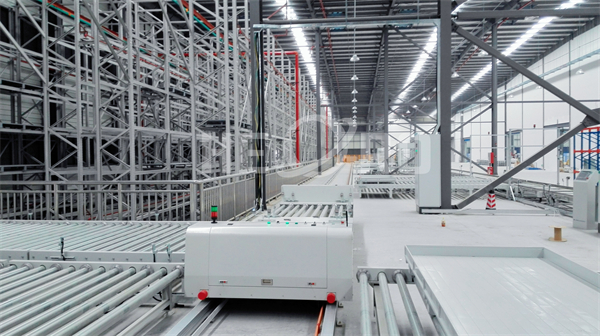
High efficiency and precise operational capabilities are the core competitive advantages of smart warehousing. Traditional warehousing relies entirely on manual labor throughout the entire process; tasks such as order picking and inventory counting are inefficient and error-prone, making it difficult to handle surges in orders. By integrating AGV robots, automated sorting equipment, and warehouse management systems, smart warehousing enables 24/7 uninterrupted operations. Picking efficiency increases by more than eightfold, with an operational accuracy rate of 99.99%. This eliminates issues such as mis-shipments and omissions caused by human fatigue, significantly shortening order fulfillment cycles.
Cost optimization and refined management make smart warehousing a key solution for businesses to reduce costs and improve efficiency. In traditional warehousing, labor costs account for over 60% of operating expenses, compounded by high staff turnover and significant training costs. Smart warehousing can replace over 80% of repetitive manual labor, requiring only a small number of personnel for equipment monitoring and maintenance, which can reduce labor costs by more than 30% in the long term. Additionally, by collecting real-time inventory data, smart warehousing enables dynamic inventory updates and accurate alerts, preventing both overstocking and shortages, and empowering managers to make data-driven decisions.
Today, smart warehousing is widely adopted across multiple industries, including e-commerce, manufacturing, and pharmaceuticals. With its flexible scalability and adaptability to diverse scenarios, it meets the warehousing needs of various enterprises. In the future, as technology continues to evolve, smart warehousing will undergo further intelligent upgrades, unlocking greater value for warehouse operations and helping enterprises gain a competitive edge in the fiercely competitive market.