Industry News
News Center
2026.04.23
Empowering the Upgrade to Smart Manufacturing: Smart Factory Information Systems Lay the Foundation for Corporate Growth.
Amid the ongoing momentum of Industry 4.0 and the deepening implementation of the “Made in China 2025” strategy, smart manufacturing has become the core direction for the transformation and upgrading of the manufacturing sector. As the cornerstone of smart manufacturing, smart factory information systems are driving the transformation of traditional factories toward digitalization, intelligence, and lean operations. They help enterprises break through development bottlenecks, enhance core competitiveness, and achieve high-quality growth. Today, an increasing number of manufacturing enterprises recognize that a comprehensive smart factory information system is not merely a choice for technological upgrading, but also a key tool for enterprises to adapt to market changes and achieve high operational efficiency.
The information system of a smart factory is a comprehensive digital framework that integrates cutting-edge technologies such as the Internet of Things (IoT), big data, and artificial intelligence (AI), covering the entire process from production and management to collaboration. Its core value lies in enabling data-driven collaboration and optimization, breaking down information silos between the enterprise’s decision-making level, production execution level, and equipment level, thereby enhancing production efficiency, improving management accuracy, and making decisions more scientifically sound. Compared to the information management models of traditional factories, the information system of a smart factory has achieved a shift from “passive response” to “proactive prediction” and a leap from “decentralized management” to “holistic collaboration,” transforming the extensive operational model of traditional manufacturing.
In the production phase, the smart factory’s information system enables end-to-end digital control and management, encompassing the coordinated operation of core modules such as ERP (Enterprise Resource Planning) and MES (Manufacturing Execution System). As the “digital brain” of the smart factory, the ERP system coordinates all business modules—including finance, procurement, production, and sales—to achieve the integration of logistics, cash flow, and information flow; The MES system, in turn, takes the plans from the ERP and converts them into shop-floor work instructions, enabling precise execution of production scheduling, quality control, and equipment management. By integrating these modules, the smart factory’s information system makes production processes more transparent and efficient, effectively reducing production redundancies, lowering costs, and improving both production efficiency and product yield rates.
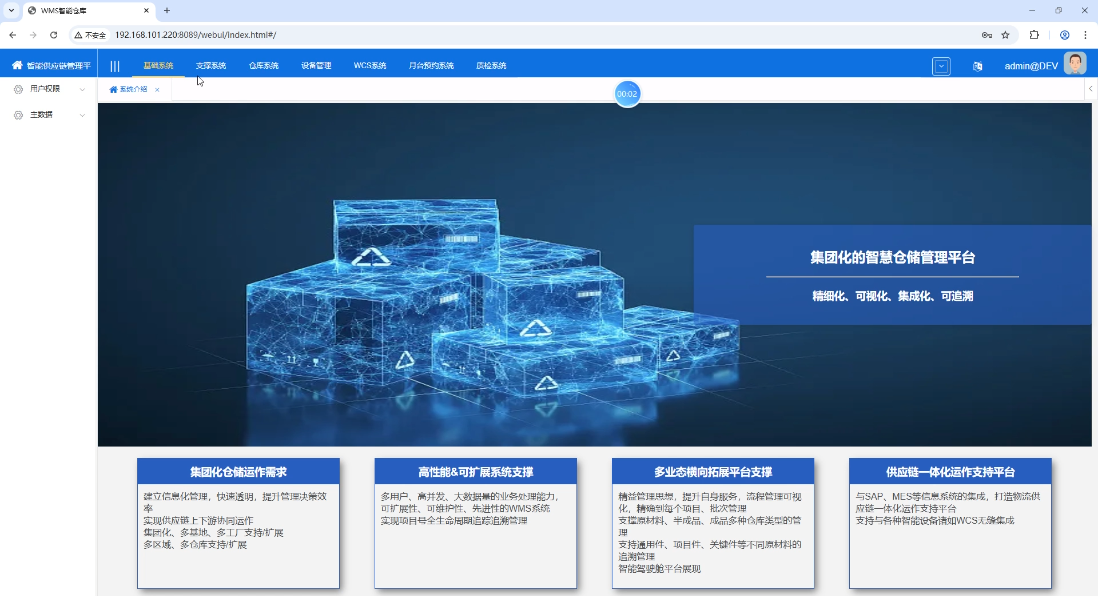
At the management and collaboration level, the smart factory’s information system breaks down information silos between departments, enabling collaboration both within the enterprise and across the supply chain. For example, the WMS (Warehouse Management System) optimizes warehouse space and inventory turnover, enabling intelligent material zoning, batch traceability, and inventory alerts. Additionally, the smart factory’s information system supports mobile collaboration, allowing managers to view production data and approve workflows in real time, thereby significantly improving management efficiency.
With continuous technological innovation, the smart factory’s information system is evolving toward greater intelligence, flexibility, and sustainability. In the future, technologies such as digital twins and artificial intelligence will be deeply integrated with smart factory information systems to enable virtual simulation of production processes, predictive maintenance for equipment failures, and precise control of energy consumption, thereby helping enterprises achieve flexible and green production. For manufacturing companies, deploying and optimizing smart factory information systems—breaking down data silos and strengthening system collaboration—will become an inevitable choice for addressing market competition and achieving sustainable development.
As a key pillar of the smart manufacturing sector, the information systems of smart factories are propelling the manufacturing industry into a new digital era. Only by keeping pace with technological trends, continuously improving the development of smart factory information systems, and integrating digital and intelligent concepts into every aspect of production operations can enterprises seize the initiative in fierce market competition, lay a solid foundation for high-quality development, and inject momentum into the transformation and upgrading of the manufacturing sector.